


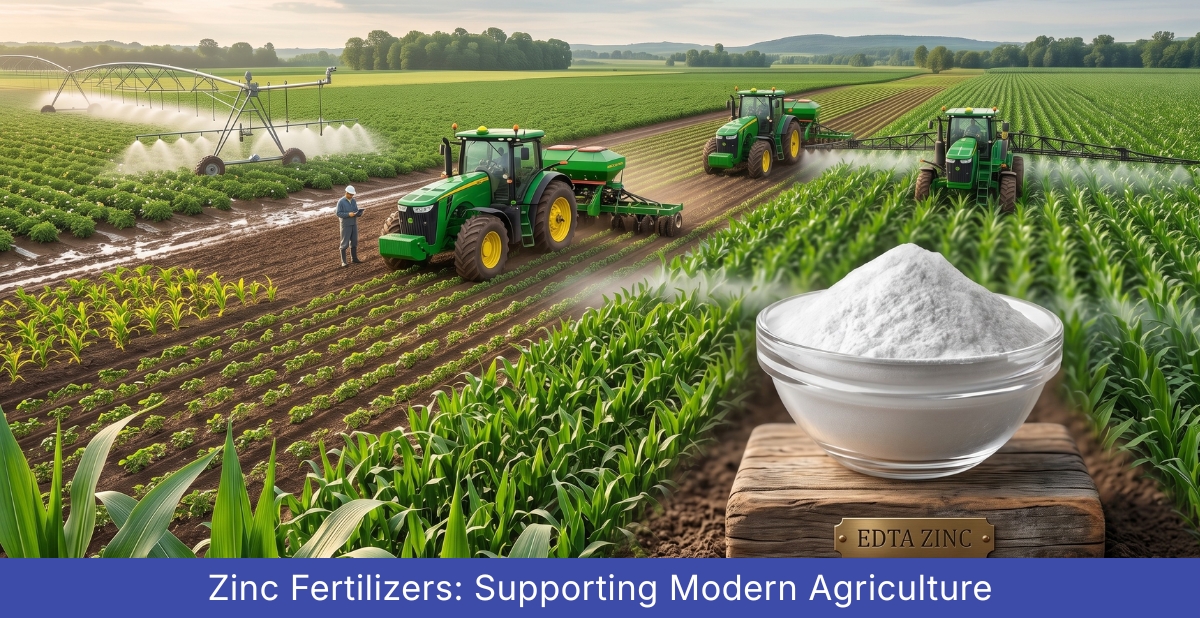
Introduction to Zinc Fertilizers in Modern Agriculture
Zinc is one of the most essential micronutrients required for healthy crop growth and optimum agricultural productivity. It plays an important role in enzyme activation, chlorophyll formation, protein synthesis, carbohydrate metabolism, pollen development, and plant hormone production. Zinc deficiency has become increasingly common across agricultural regions due to intensive cultivation, alkaline soil conditions, continuous nutrient mining, and imbalanced fertilizer application.
Among the numerous zinc fertilizers available in the global market, EDTA Zinc and Zinc Sulphate are the two most widely used products. Although both supply zinc to plants, their chemical properties, nutrient availability, application efficiency, compatibility, and long term performance differ significantly. Understanding these differences helps fertilizer manufacturers, agricultural input companies, distributors, exporters, and commercial growers select the most suitable zinc source for specific crops and soil conditions.
This guide explains the characteristics, advantages, limitations, industrial relevance, and purchasing considerations of both products from a global business perspective.
Understanding EDTA Zinc and Zinc Sulphate
EDTA Zinc is the abbreviated form of Ethylenediaminetetraacetic Acid Zinc Chelate. It is a chelated micronutrient fertilizer in which zinc ions are chemically bonded with EDTA, a powerful chelating agent that protects the micronutrient from precipitation and improves nutrient availability. Depending on regional markets, EDTA Zinc may also be referred to as Zinc EDTA, Zinc Chelate, Chelated Zinc Fertilizer, Chelated Zinc Micronutrient, or Zn EDTA.
Zinc Sulphate is an inorganic zinc compound available primarily as Zinc Sulphate Monohydrate and Zinc Sulphate Heptahydrate. It is one of the oldest and most economical zinc fertilizers used in conventional agriculture and several industrial applications. In many countries it is marketed as Zinc Sulfate, Zinc Sulphate Fertilizer, Zinc Sulfate Agricultural Grade, or Zinc Sulphate Technical Grade.
Both products serve as zinc sources, yet their behavior after application differs considerably due to their chemical structures.
Read Our Article
How EDTA Disodium Improves Fertilizer Stability in AgricultureChemical Properties Comparison
| Parameter | EDTA Zinc | Zinc Sulphate |
| Chemical Type | Chelated Zinc Compound | Inorganic Zinc Salt |
| Full Form | Ethylenediaminetetraacetic Acid Zinc | Zinc Sulphate |
| Zinc Availability | Very High | Moderate |
| Stability | Excellent | Moderate |
| Solubility | Highly Soluble | Highly Soluble |
| Performance in Alkaline Soil | Excellent | Limited |
| Micronutrient Protection | Excellent | Low |
| Fertigation Compatibility | Excellent | Good |
| Foliar Spray Suitability | Excellent | Good |
| Precision Agriculture | Highly Suitable | Suitable |
How Chelation Improves Zinc Efficiency
One of the most significant advantages of EDTA Zinc lies in the chelation process. EDTA forms a stable complex around zinc ions, preventing them from reacting with calcium, magnesium, phosphates, carbonates, and bicarbonates commonly present in soil and irrigation water.
This protective mechanism keeps zinc available for plant absorption over a longer period. As a result, crops receive consistent micronutrient nutrition with improved uptake efficiency and reduced nutrient losses.
In contrast, Zinc Sulphate releases free zinc ions immediately after application. Under alkaline soil conditions these ions can quickly react with soil minerals, forming insoluble compounds that become unavailable to plants. Consequently, repeated fertilizer applications may be necessary to maintain adequate zinc nutrition.
Soil Compatibility Across Different Agricultural Regions
Soil characteristics significantly influence fertilizer performance.
Acidic soils generally allow satisfactory performance from both EDTA Zinc and Zinc Sulphate because zinc remains relatively available under lower pH conditions.
Neutral soils provide acceptable nutrient availability for both products, although EDTA Zinc continues to demonstrate greater efficiency due to its enhanced stability.
Alkaline soils present greater challenges for conventional zinc fertilizers. High pH conditions encourage zinc fixation, reducing nutrient availability. Since EDTA Zinc protects zinc ions from undesirable chemical reactions, it performs exceptionally well in alkaline, calcareous, and saline soils where Zinc Sulphate often loses effectiveness.
This makes EDTA Zinc particularly valuable in regions where high soil pH limits micronutrient availability.
Our Other Product
EDTA Magnesium (Ethylenediaminetetraacetic Acid Magnesium)Crop Performance Comparison
Different crops exhibit varying responses to zinc fertilizers depending on their nutrient requirements and cultivation practices.
EDTA Zinc is widely preferred for fruits, vegetables, grapes, citrus, strawberries, tomatoes, potatoes, onions, cotton, maize, sugarcane, tea, coffee, ornamentals, nurseries, greenhouse cultivation, hydroponics, precision farming, and protected agriculture.
Zinc Sulphate remains a practical solution for cereals, wheat, rice, pulses, oilseeds, fodder crops, and large acreage farming where lower input costs remain a priority.
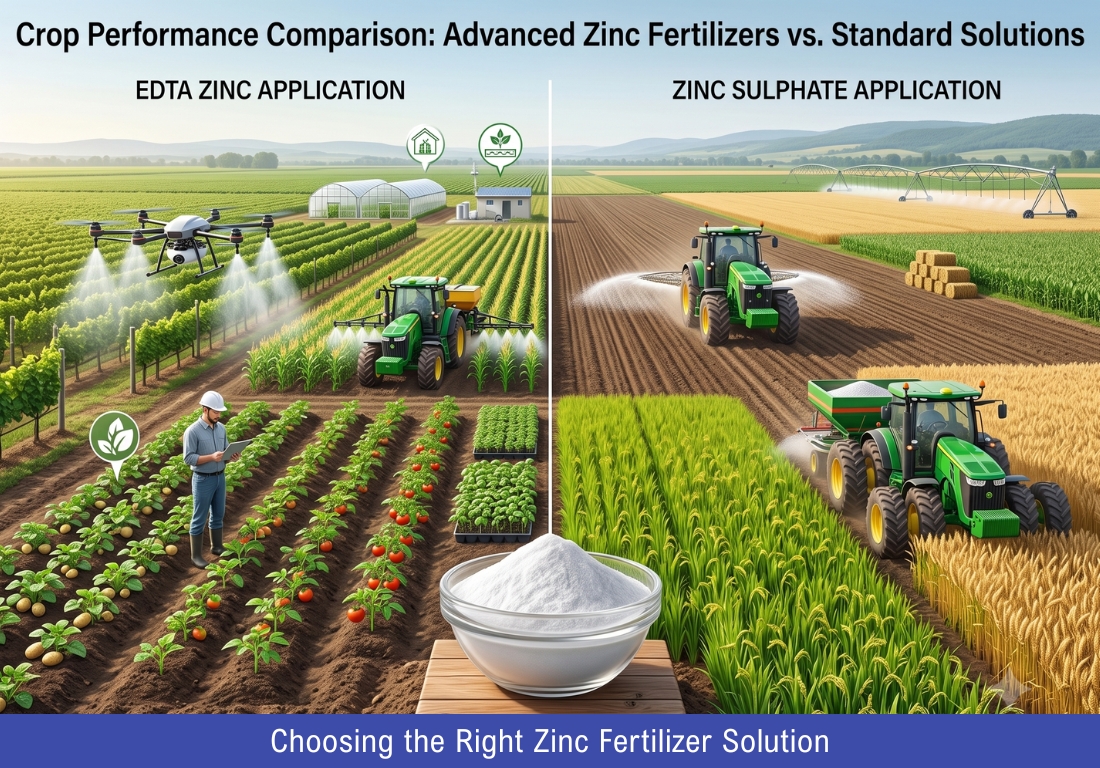
High value export oriented horticulture generally benefits more from chelated zinc because consistent micronutrient availability directly supports crop quality, fruit size, color development, and market value.
Nutrient Absorption Efficiency
The objective of micronutrient fertilization extends beyond nutrient application. Successful fertilization depends on how efficiently plants absorb and utilize those nutrients.
EDTA Zinc provides improved nutrient mobility within the soil solution and facilitates faster absorption through both leaf surfaces and root systems. This results in higher nutrient use efficiency while reducing fertilizer wastage.
Zinc Sulphate supplies readily available zinc initially, but part of the applied nutrient may become chemically unavailable depending on soil conditions. Consequently, overall nutrient recovery by crops is generally lower than chelated zinc formulations.
Application Methods
Both fertilizers support multiple application techniques.
| Application Method | EDTA Zinc | Zinc Sulphate |
| Foliar Spray | Excellent | Good |
| Fertigation | Excellent | Moderate |
| Drip Irrigation | Excellent | Moderate |
| Soil Application | Excellent | Good |
| Hydroponics | Highly Recommended | Limited |
| Precision Farming | Highly Suitable | Suitable |
Modern irrigation systems increasingly favor EDTA Zinc because of its superior solubility and compatibility with integrated nutrient management programs.
Performance Under Different Water Conditions
Water quality has become an increasingly important factor in fertilizer selection. Hard water containing calcium and magnesium salts can reduce the effectiveness of conventional micronutrients.
EDTA Zinc maintains stability even when irrigation water contains dissolved minerals. This ensures reliable nutrient delivery through drip irrigation and fertigation systems.
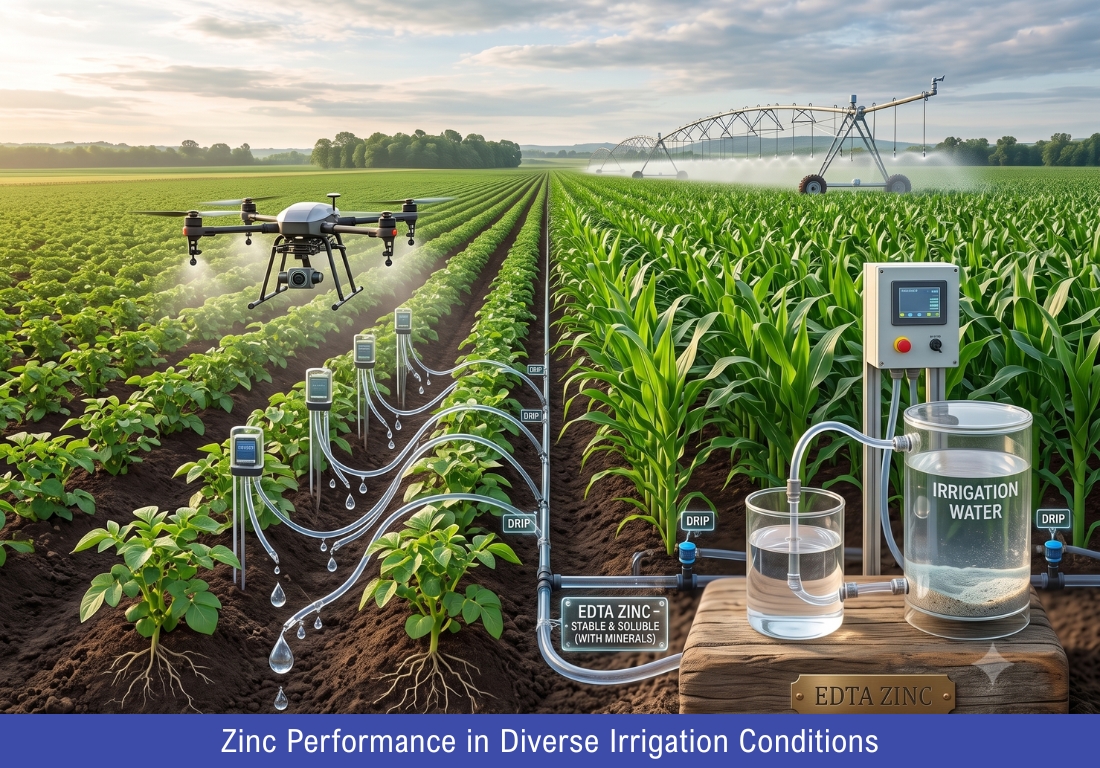
Zinc Sulphate may react with certain dissolved ions under unfavorable conditions, potentially reducing application efficiency in complex irrigation systems.
Economic Evaluation Beyond Initial Purchase Price
Many purchasing decisions focus solely on product price rather than overall economic value.
Zinc Sulphate generally offers a lower purchase cost, making it attractive for broad acre farming operations and cost sensitive markets.
EDTA Zinc carries a higher initial investment due to the chelation process and manufacturing complexity. However, greater nutrient efficiency, fewer repeat applications, improved crop quality, and enhanced productivity frequently compensate for the higher purchase price.
Commercial growers often evaluate fertilizer performance based on return on investment rather than purchase price alone.
Global Demand Trends
- Precision agriculture
- Sustainable farming
- High value horticulture
- Greenhouse cultivation
- Controlled environment agriculture
- Water efficient irrigation
- Specialty fertilizers
- Export quality crop production
- Soil health management
- Balanced plant nutrition
Our Other Product
Zinc Sulfate Monohydrate 33% & 36%Industrial Sectors Purchasing EDTA Zinc
- Micronutrient fertilizer manufacturers
- Water soluble fertilizer producers
- Specialty fertilizer companies
- Hydroponic nutrient manufacturers
- Liquid fertilizer formulators
- Agricultural input distributors
- Contract manufacturing organizations
- Export trading companies
- Agricultural research institutes
- Government procurement agencies
- Plantation companies
- Commercial greenhouse operators
Factors Global Buyers Should Evaluate Before Procurement
- Zinc content
- Chelation percentage
- Water solubility
- Product purity
- Heavy metal compliance
- Moisture level
- Batch consistency
- Manufacturing capability
- Packaging options
- Export documentation
- Regulatory compliance
- Supply chain reliability
- Technical support
- Laboratory testing
- Quality certifications
Why India Has Become a Preferred Source for EDTA Zinc
India has established itself as a leading supplier of specialty agricultural chemicals due to its strong manufacturing infrastructure, technical expertise, export capabilities, and competitive production costs.
Indian manufacturers serve fertilizer companies, agrochemical producers, distributors, and international procurement agencies by delivering products that comply with global quality expectations while maintaining cost competitiveness.
Reliable manufacturers also provide customized packaging, private labeling, export documentation, and technical assistance for international markets.
Choosing Between EDTA Zinc and Zinc Sulphate
The appropriate product depends primarily on agricultural objectives, soil characteristics, irrigation practices, crop value, and nutrient management strategy.
EDTA Zinc is generally preferred when maximizing nutrient efficiency, improving crop quality, supporting precision farming, and cultivating high value crops under alkaline or challenging soil conditions.
Zinc Sulphate remains a practical option for conventional field agriculture where soil conditions are favorable and cost optimization is the primary objective.
Rather than viewing these products as direct competitors, many fertilizer programs incorporate both products strategically according to crop requirements, production economics, and regional agronomic conditions.
Conclusion
EDTA Zinc and Zinc Sulphate each play valuable roles in modern crop nutrition. Zinc Sulphate continues to serve conventional agriculture with an economical source of zinc, while EDTA Zinc delivers superior nutrient stability, improved plant availability, enhanced compatibility with advanced irrigation systems, and better performance under alkaline soil conditions.
As global agriculture moves toward precision farming, sustainable nutrient management, and higher productivity, demand for chelated micronutrients continues to increase. For fertilizer manufacturers, agricultural distributors, exporters, and international procurement agencies seeking reliable zinc nutrition solutions, selecting a trusted Indian manufacturer with strong quality control, technical expertise, and export capabilities is equally as important as choosing the appropriate zinc formulation. Companies such as ShivamAgro Industries support this growing demand by supplying high quality EDTA based micronutrients that meet the evolving requirements of global agricultural markets.