


Introduction
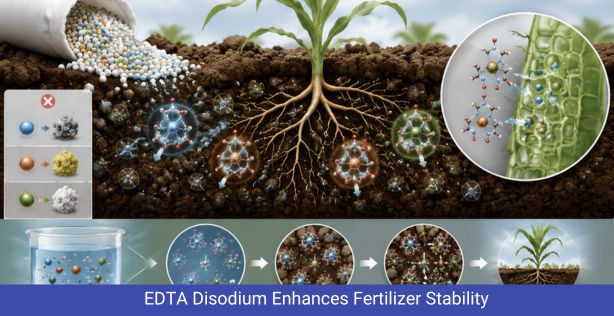
Modern agriculture is no longer just about adding nutrients to the soil-it’s about ensuring those nutrients remain available, stable, and absorbable for crops. One of the biggest challenges farmers and fertilizer manufacturers face is nutrient loss due to chemical reactions in soil and water.
This is where EDTA Disodium plays a crucial role.
As a powerful chelating agent, EDTA Disodium enhances the stability, efficiency, and performance of fertilizers, making it an essential component in modern agrochemical formulations. From preventing nutrient precipitation to improving micronutrient uptake, its impact is both technical and highly practical.
What is EDTA Disodium?
EDTA Disodium (Ethylenediaminetetraacetic acid disodium salt) is a widely used chelating agent known for its ability to bind with metal ions such as calcium, magnesium, iron, and zinc.
In agriculture, it is primarily used to:
- Stabilize micronutrients in fertilizers
- Prevent unwanted chemical reactions
- Improve nutrient solubility and availability
Its strong binding capacity ensures that essential nutrients remain in a plant-available form, even under challenging soil conditions.
The Problem: Why Fertilizer Instability Occurs
Before understanding the solution, it’s important to identify the problem.
Nutrient Precipitation
Micronutrients like iron, zinc, and calcium often react with:
- Carbonates
- Phosphates
- Hydroxides
This leads to the formation of insoluble compounds, making nutrients unavailable to plants.
Soil pH Impact
- In alkaline soils (common in India), micronutrients quickly become inactive
- Nutrients get locked and cannot be absorbed by roots
Water Quality Issues
Hard water contains high levels of calcium and magnesium, which:
- Interfere with fertilizer composition
- Reduce nutrient effectiveness
Storage & Shelf-Life Problems
Without stabilizers, fertilizers:
- Degrade over time
- Lose potency
- Show reduced field performance
Read Our Article
How EDTA Zinc Fertilizer Solves Zinc Deficiency in CropsHow EDTA Disodium Solves These Problems
Chelation: Locking Nutrients in a Stable Form
EDTA Disodium binds with metal ions to form stable chelates. This prevents nutrients from reacting with other elements in soil or water.
Result:
- Nutrients remain soluble
- No precipitation
- Higher bioavailability
Improved Nutrient Availability
Chelated nutrients are:
- Easily absorbed by plant roots
- Transported efficiently within the plant
This ensures that crops receive the maximum benefit from applied fertilizers.
Protection Against Soil pH Variations
One of the biggest advantages of EDTA Disodium is its ability to protect nutrients across different pH levels.
Especially useful in:
- Alkaline soils
- High pH irrigation environments
It keeps micronutrients active and accessible, even in unfavorable conditions.
Enhanced Fertilizer Compatibility
EDTA Disodium improves compatibility in:
- Liquid fertilizers
- Foliar sprays
- Fertigation systems
It prevents unwanted reactions between:
- Different nutrients
- Water impurities
Longer Shelf Life of Fertilizers
By stabilizing reactive components, EDTA Disodium:
- Prevents degradation
- Maintains product consistency
- Extends storage life
This is especially valuable for manufacturers and distributors.
Our Other Product
Zinc Bisglycinate (Zinc Glycinate)Applications of EDTA Disodium in Agriculture
Micronutrient Fertilizers
Liquid Fertilizers
Prevents:
- Settling
- Precipitation
- Chemical breakdown
Foliar Spray Solutions
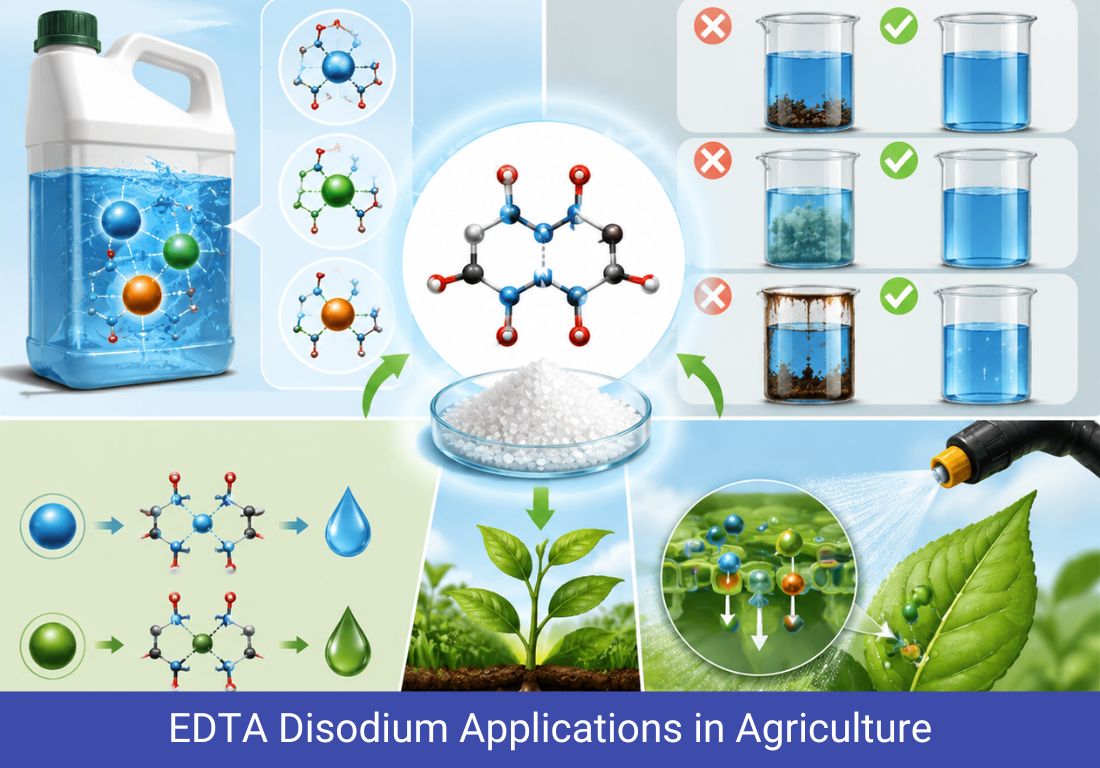
Improves:
- Nutrient absorption through leaves
- Quick correction of deficiencies
Fertigation Systems
Ensures:
- Uniform nutrient distribution
- No clogging in drip systems
Soil Conditioners
Enhances:
- Nutrient retention
- Soil efficiency
Benefits for Farmers
Higher Crop Yield
Stable nutrients mean better absorption, leading to improved plant growth and productivity.
Efficient Use of Fertilizers
Less wastage ensures maximum return on investment.
Faster Deficiency Correction
Chelated nutrients act quickly, especially in foliar applications.
Better Crop Quality
Improves:
- Color
- Size
- Nutritional value
Benefits for Fertilizer Manufacturers
Improved Product Performance
EDTA-based formulations deliver consistent results in the field.
Better Market Positioning
Chelated fertilizers are considered premium products.
Reduced Product Failures
Stability ensures fewer complaints and better brand trust.
Compatibility with Modern Farming
Supports:
- Precision agriculture
- Drip irrigation
- Advanced nutrient management systems
EDTA Disodium vs Non-Chelated Fertilizers
| Factor | With EDTA Disodium | Without EDTA |
| Nutrient Stability | High | Low |
| Solubility | Excellent | Poor |
| Soil Reaction | Minimal | High |
| Nutrient Availability | Maximum | Limited |
| Efficiency | High | Low |
Best Practices for Using EDTA Disodium in Fertilizers
- Use recommended dosage based on crop and soil type
- Combine with appropriate micronutrients
- Ensure proper mixing in liquid formulations
- Store fertilizers in dry, controlled environments
Our Other Product
Magnesium Bisglycinate (Magnesium Glycinate)Future of Chelated Fertilizers in Agriculture
With increasing focus on:
- Sustainable farming
- Precision agriculture
- Efficient nutrient management
Chelating agents like EDTA Disodium will play a critical role in the future of agriculture.
Farmers are moving toward:
- High-efficiency inputs
- Reduced wastage
- Better ROI
And EDTA-based fertilizers perfectly align with these goals.
Conclusion
EDTA Disodium is not just a chemical additive-it is a performance enhancer for modern fertilizers.
By improving nutrient stability, preventing losses, and enhancing absorption, it ensures that fertilizers deliver their full potential in the field. Whether it’s for farmers seeking better yields or manufacturers aiming for superior products, EDTA Disodium stands out as a key ingredient in agricultural success.